Monday, January 9, 2012

Diagnosis: The Missing Ingredient in RTI Assessment

 Diagnosis: The Missing Ingredient in RTI Assessment
In Kindergarten assessments are all one on one and having no Para for eighteen, well, it’s time consuming.  That being said when I print out those DIBELS NEXT graphs I can see the big picture and grouping for differentiation is a breeze. I never thought of the RTI as an approach to identifying those that are learning disabled. I thought it was, as stated in the article by Lipson “intended to reduce the number of students identified as having a learning disability by preventing difficulties.” In kindergarten we are starting from scratch. We have a blank slate, sometimes more blank than we’d like. Making up for a lack of language in the home many timesis difficult and assumed to be in place at the beginning of the year.
I think the template included in the article for analyzing student data and creating profiles would be very useful.  It is essential to separate the componentsof reading development to pin point astarting place for intervention and instruction.  Without very clear diagnostic information there is a large chance of wasting valuable time in implementing instruction that is neither beneficial to the child reading ability and adds to their frustration. Children identify at such an early age whether school is a place for them or not, it is our duty on the front lines to guide them to seeing that learning is fun and the only way to responsibly do so is to remove the berries between them and success. Obviously I take laying thefoundational reading skills very seriously. I feel very blessed to have good tools and programs in effect right now.
Also the article stated that attacking the bubble group as largely unsuccessful and an approach that made the school “realize improvement”. I disagree; attacking the bubble lessens the case load for specialists than can focus their attentions on students in real need. It puts the focus on the specific deficit the young reader has and pulls them up with the pack at our grade level.
I feel that we have the data but are not afforded enough time to analyze it with our peers who could bring in added insights especially veteran teachers. I agree that the real challenge before us is using the data we have collected in the most useful instructional decision making. The administration in our school the past two years has a large focus on just that. The more time spent with it the less overwhelming and more useful it feels. 

Monday, September 26, 2011

Florida Centers For reading Research-kindergarten phonics

Florida Center for Reading Research
http://www.fcrr.org/

To begin the year I used the letter arch activities which are just putting the alphabet in order. First with the letters to match then missing letters, the kids enjoyed them. I could see their growth in identifying the letter order and using the letter sound cards from Imagine It on the walls for guides which was good to see they were able to transfer the information from the wall to their work mats.

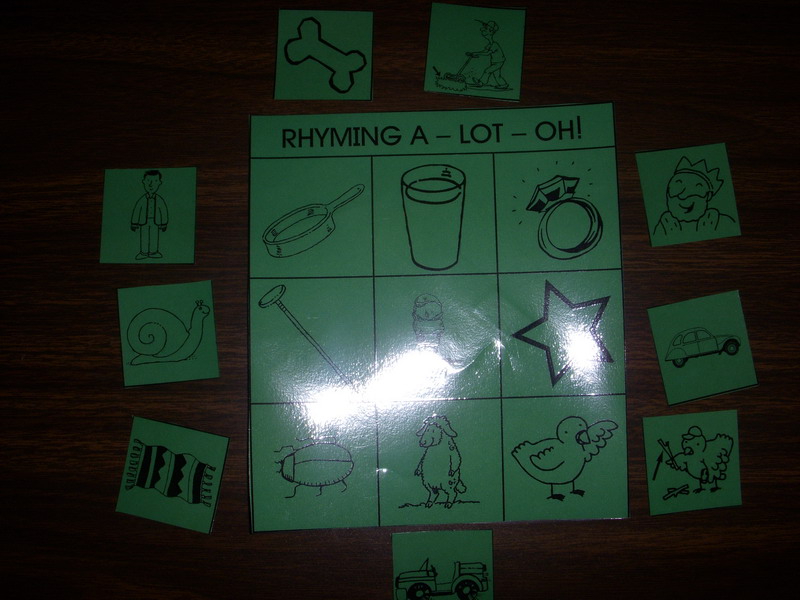
Recently I’ve introduced the following two Florida Centers into my workstations for rhyming alliteration.

Phonological Rhyme Recognition PA.002


 These are great centers the kids love learning games! The Reading Research Center is a fountain of information and better yet, ready to print, free activities that follow the guidelines for phonological instruction. It is an extraordinary resource for center activities for K-5th grade.  The above game shows that the objectives, activities, materials, and extensions are all presented for you. We print them on color paper just because it's more interesting to the kids. You can use the center as suggested or I like to use it as a rhyme memory game. I introduce the centers during guided reading then the next day I put into independent workstations.

This one is another rhyming activity that is very good.
My only complaint would be that some of the centers that claim to be independent......well............ it depends on your class.

Onset-Rime Blending and Segmentation


Phoneme Awareness and Letter Knowledge Instruction “will facilitate children’s learning of the alphabetic principle by drawing their attention to the sounds that are related to individual letters.”
-Barbara Neslin


Lesson
Objective: to teach onset-rime and letter sound correspondence.
·       During small group instruction give each child a mat and 5 die cut letters.
  • ·       Begin by making sure the red arrow is on the bottom as they look at the mat.
  • ·       Next, check for understanding of the position of the first, middle and last sounds. By having the children touch the appropriate spaces.
  • ·       Vowels are always red and placed in the middle section for instruction on word families and changing the onset rime.
  • ·       “Put the /a/ in the middle and the /t/ at the end. /aaaaaa/ /t/, good at.”
  • ·       Add the /mmmm/ sound to the front. Stretch the sounds /mmm//aaaaa//t/, mat.
  • ·       Take off the /m/ and put on the /p/.
  • ·       /p/ /aaaaa//t/ pat.
  • ·       Take off the /p/ and put on the /sssss/
  • ·       Stretch the sounds. /ssssss//a//t/ sat. 
  • ·       Continue with whatever new letter sounds you are working with that week.
  • Extend activity to ending sounds

I’ve always great results with this in my guided reading groups the children love the hands on activity. They remain engaged and like to be inventive. I let them make up their own words and we discuss whether they have made a real word or nonsense words after they sound them out. I look forward to using them when we get there this year!